It’s taken me a while to sit down and write this. Between being exhausted, being sore, trying to recover from surgery, running a business and having a newborn at home, writing hasn’t exactly been high on my list of priorities. Most days, by the time I have a chance to sit down and write, I’m pretty damn tired and the last thing I want to do is sit in front of a computer.
I don’t know how much I’ll be writing over the next little while, but I’m going to try. I’d like to document this recovery as much as possible, not just the good days and the accomplishments, but the shitty days, the frustrations and everything in between.
Going into open-heart surgery, I was told, “You’re young and fit, you’re going to recover easily and be back in the gym in no time!” I was told I’d likely be back in the gym within six to eight weeks, lifting weights again after 12 weeks, and potentially back playing hockey within three to four months.
It’s now been just over five months since my surgery, and while I’ve made a considerable amount of progress since July, I’m nowhere near where I thought I’d be at this point.

Coming Home
On July 10, I underwent open-heart surgery to repair my bicuspid aortic valve and replace part of my ascending aorta. Unfortunately, the surgery didn’t exactly go according to plan. Significant bleeding meant I had to be opened back up, I spent roughly 28 hours under anesthesia, and I experienced several complications involving my heart, lungs and fluid retention.
I spent 11 days in the hospital and was finally discharged on July 21, weighing 153 pounds. I’d gone into surgery weighing approximately 175 pounds, and the previous summer, I was 185 pounds. Looking at those pictures side by side is pretty incredible, and not in a good way.
Before surgery, I was training in kickboxing and jiu-jitsu, lifting weights and playing hockey. Now, something as simple as lifting a fork, sitting down or getting up required effort. Walking down a hospital hallway was an accomplishment. It’s difficult to explain just how physically weak I felt.
Coming home and seeing the boys’ “Welcome Home Dad” sign was pretty special. I was finally home with my family, but I had a hell of a lot of work ahead of me.
July and August: Learning to Move Again
My exercise routine when I first got out of the hospital consisted of four five-minute walks a day. Aside from that, I was doing a whole lot of sleeping and resting.
The first couple of weeks were also considerably more difficult mentally than I’d anticipated. I experienced anxiety, fear, periods of depression and moments when I’d find myself crying. I knew surgery was going to take a physical toll on me, but I hadn’t really considered the emotional side of recovery. Thankfully, by the three-week mark, I was beginning to feel better mentally.
Physically, I walked. And walked. And walked some more. By the end of July, I was managing 20 to 30 minutes at a time, and by early August, I was walking around two kilometres. I was eating better and gradually putting weight back on. By August 13, I was back up to 164 pounds.
Around seven weeks after surgery, I started getting back into the gym. One of the first exercises I attempted was lunges. I did 12 lunges and could barely walk for three days afterward. And when I say I was sore, I mean sore as FUCK! My legs felt like I’d just finished a heavy 5×5 leg workout, except I’d done 12 damn lunges.
Lunges used to be part of my warm-up, and now they were my workout.
I gradually worked my way up to step-ups and introduced other basic movements. I also got back on the Assault Bike, using only my legs for 20 minutes and keeping my heart rate at or below 105 beats per minute. After spending weeks doing little more than walking, it felt pretty damn good to be doing something in the gym again.

September: Getting Back Into a Routine
By the middle of September, I’d managed to get my weight back up to around 170 pounds. Most of my resistance training was banded, and when I was using dumbbells, I was generally working with five or ten pounds. I was still experiencing a ridiculous amount of muscle soreness from relatively basic exercises.
I tried running, too. That was a failure. After all the walking I’d been doing, I was looking forward to increasing the intensity a little, but I just wasn’t able to do it.
On September 18, I had my first stress test since surgery. I lasted approximately five minutes, reached a heart rate of 133 beats per minute, and the test was stopped because my blood pressure dropped. After spending two months gradually increasing my activity and working on my conditioning, I was incredibly disappointed.
One of the more frustrating aspects of recovering here in the Northwest Territories has been the lack of access to proper cardiac rehabilitation services. I’m fortunate that I’ve spent nearly 20 years working in strength and conditioning and co-own a gym, but there’s a big difference between programming exercise for somebody who’s deconditioned and managing recovery from major heart surgery.
I know a hell of a lot about exercise, but I’m not a cardiologist.
October: Progress and Frustration
By October 7, I’d been back in the gym for 42 days. I was gradually increasing my activity, introducing more exercises and using slightly heavier resistance where I could.
On October 21, I had another stress test. This time I managed approximately seven minutes and reached a heart rate of 160 beats per minute. Unfortunately, I was also experiencing significant atrial flutter during the test.
My heart’s ejection fraction, which measures the percentage of blood pumped out of the left ventricle with each contraction, was approximately 37 percent following surgery. At my three-month follow-up, it was around 38 percent. I was obviously hoping to see a little more improvement than that.
By late October, I was back up to 173 pounds. I was feeling physically stronger, but I was still getting short of breath, and my cardiovascular capacity was considerably more limited than I’d hoped it would be.
According to the original recovery timeline, I could potentially have been getting back into hockey. Instead, I was still working with resistance bands, light dumbbells and basic bodyweight exercises.
I missed hockey, kickboxing, jiu-jitsu, training properly and being able to wrestle around with the boys. It’s incredible how many things you take for granted when you’re physically capable of doing them every day.
November: Recovery With a Newborn
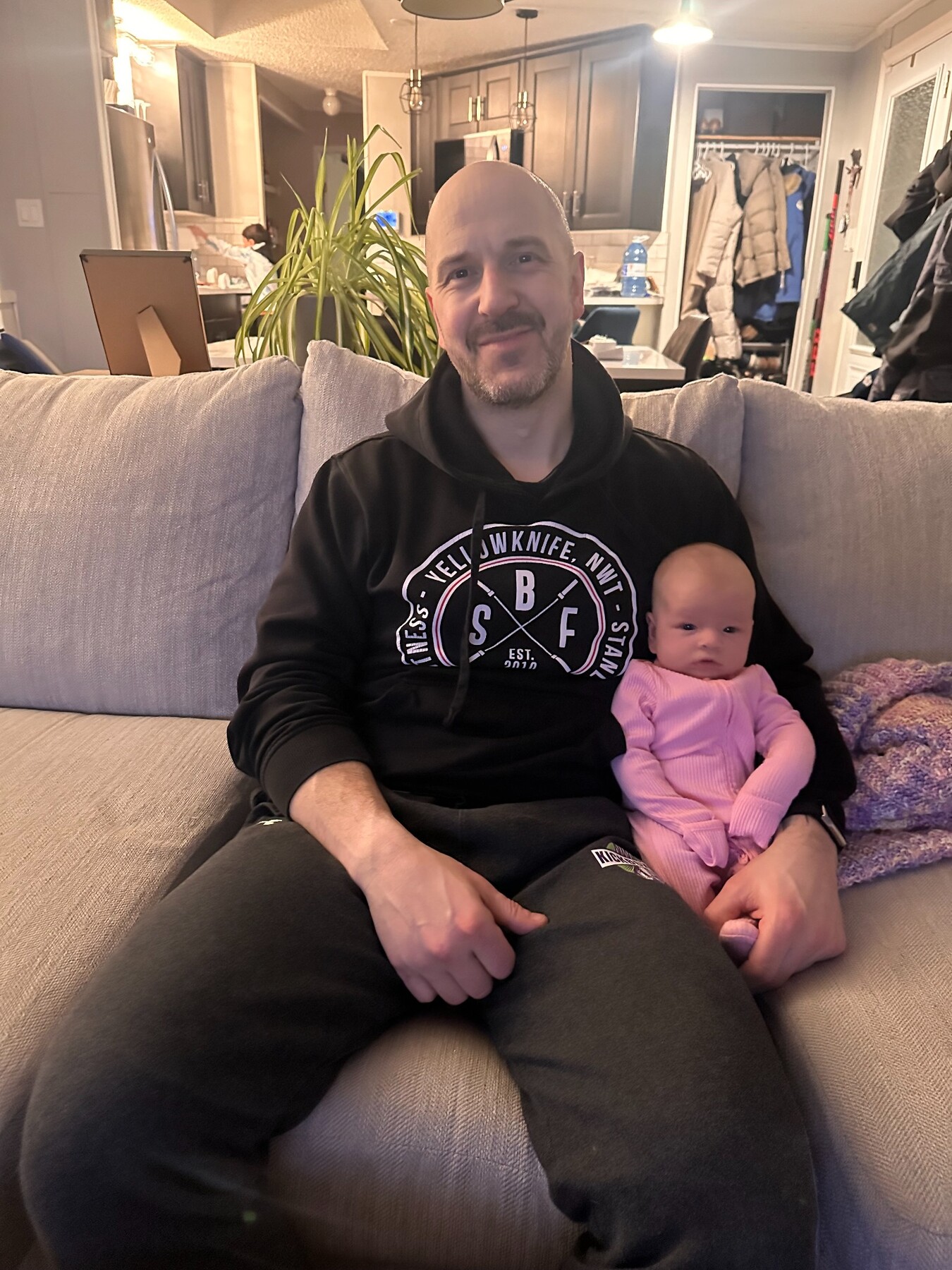
On November 11, we welcomed our daughter, Charlie, into the world. As if recovering from open-heart surgery wasn’t enough, we decided to throw a newborn into the mix.
I’ve already written about how damn exhausting having a newborn again has been, especially while still recovering from surgery, so I won’t get into all of that again here. But trying to manage my energy, get enough rest, spend time with the boys, help Vic with Charlie, run a business and continue working on my recovery has certainly been interesting.
I’ve spent years telling clients coming back from injuries and extended periods of inactivity to be patient, stop comparing themselves to where they used to be, and focus on what they’re capable of doing today. Apparently, taking your own advice is a hell of a lot harder than giving it.
December: Five Months of Rebuilding
The last couple of weeks have brought some pretty exciting milestones. I’ve been gradually working squats back into my training, increasing my exercise volume and introducing more movements.
On December 10, I managed 12 minutes on the stairs and accumulated 100 repetitions each of several exercises, including incline dumbbell bench press, triceps exercises, hammer curls, seated rows, squats and calf raises. Most of my resistance work is still banded, and the weights I’m using are considerably lighter than what I used to train with. That workout was also the first time I’d used both dumbbells for my bench press.
On December 11, I did my first barbell squat since surgery.
I used to squat 350 pounds, and here I am, five months after surgery, recording a video of myself doing a barbell squat because I’m so damn excited to be doing one again. I haven’t even attempted a proper push-up yet, and I still haven’t managed to get back to running.
These are things that wouldn’t have even registered as accomplishments six months ago, but right now, they’re pretty significant milestones for me.
Where I’m at Today
I’ve come a long way since those first five-minute walks in July, and I’m proud of the work I’ve put in to get here. But I’d be lying if I said I wasn’t frustrated with where I am.
At five months, I thought I’d be well into rebuilding my strength, playing hockey again and getting back to doing a lot of the things I enjoy. Instead, I’m still getting short of breath, my heart function is significantly reduced, and I’ve had two disappointing stress tests.
Why am I still getting so short of breath? Why hasn’t my heart function improved more? How much of what I’m experiencing is deconditioning, how much is related to my heart, and how much more time is it going to take?
I know how to rebuild muscle and improve someone’s conditioning, but there are aspects of this recovery that are completely outside of my control, and that’s been one of the hardest things to deal with.
I don’t want to give the impression that the last five months have been nothing but misery, because they haven’t. I’ve made some significant progress, spent time with my family and welcomed a beautiful little girl into the world. There’s a hell of a lot to be grateful for.
But I also don’t want to pretend that recovering from open-heart surgery has been this wonderful, inspirational experience where every week brings a new accomplishment and everything gradually gets better. There have been some pretty shitty days, both physically and mentally, and I think those are just as important to document as the good ones.
I can appreciate how far I’ve come and still be frustrated with where I am. I think that’s a pretty fair assessment of my recovery at five months.
For now, I’ll keep working on what I can, celebrating the little milestones and hopefully getting some more answers about my heart. I’d love to know when I’ll be able to get back to doing all the things I enjoy, but at this point, I think I’ve learned not to put a date on it.